
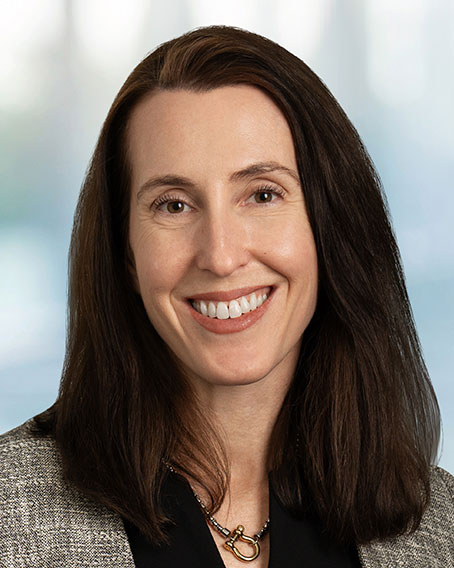
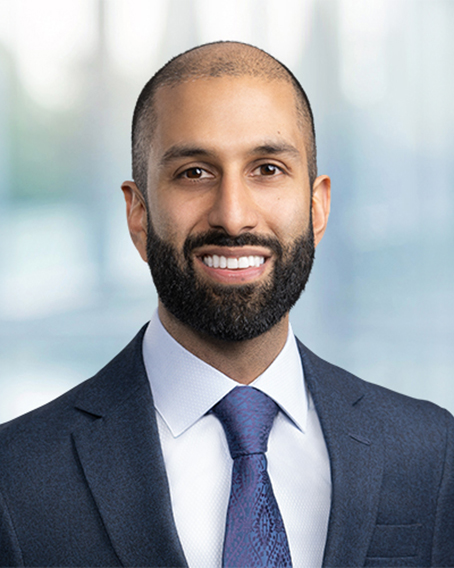
On this episode of Culture & Compliance Chronicles, Amanda Raad and Nitish Upadhyaya from Ropes & Gray’s Insights Lab, and Richard Bistrong of Front-Line Anti-Bribery, are joined by Carolyn Cherrett, a compliance leader with extensive experience building teams and programs across Asia Pacific’s water and aerospace industries. Carolyn shares her people-centric approach to compliance, focusing on integrating compliance into daily business conversations, building trust through relationships, and tailoring experiential training to local cultures. Listeners will gain practical insights on selecting compliance ambassadors and fostering a collaborative, value-adding compliance environment.


Transcript
At a glance: Click the links below to advance directly to the corresponding sections of the transcript:
- [1:01] Getting to Know Carolyn
- [4:05] Securing a Seat at the Table
- [6:31] Lessons from a Mature Ambassador Program
- [11:51] Designing Training Experiences
- [15:07] Accounting for Local Culture
- [18:10] Communication that Works Both Ways
- [23:13 ] Training that is Relatable
- [25:00] Key Takeaways
Nitish Upadhyaya: Welcome back to the Culture & Compliance Chronicles, the podcast that gives you new perspectives on legal, compliance, and regulatory challenges faced by organizations and individuals worldwide. The clue is in the title—culture is at the heart of everything. It’s the endlessly shifting patterns that govern our environment and behaviors. The magic is in amplifying certain patterns and dampening others. Let’s see if we can pique your curiosity, get you to challenge some of your perceptions, and give you space to think differently about some of your own challenges. I’m Nitish Upadhyaya, and I’m joined by Amanda Raad and Richard Bistrong. Hello, Amanda and Richard.
Amanda Raad: Hi, Nitish. Hi, Richard.
Richard Bistrong: Hello, Amanda. Hello, Nitish. Now, the last time with Beatriz from Holcim, we were talking about her Compliance Influencer Program. So, Nitish, who do we have joining us today?
Nitish Upadhyaya: Today, we welcome Carolyn Cherrett. Welcome, Carolyn.
Carolyn Cherrett: Thank you.
Getting to Know Carolyn [1:01]
Nitish Upadhyaya: We are very, very excited. You’ve got such extensive experience in building compliance teams and programs across Asia Pacific—water industries, aerospace industries. And I know that you are really passionate about people-centric compliance that allows people to make sense of their roles and ultimately helps make compliance part of the normal business conversation rather than an extra or something that people are not very excited to do, or in fact sometimes see as stopping them from achieving their business priorities and objectives. So, there’s lots to talk about. Before we get there, let’s do a rapid-fire round to help the audience get to know you a little bit better. Give us three things we should know.
Carolyn Cherrett: Well, first, I don’t have a traditional compliance background. I am not a lawyer. I’m not from finance. I started out in library and information science, I’ve worked in sales, and I’ve run P&Ls for companies. This is a second career for me. What else can I tell you? I love to grow fruit. I’m very fortunate in Singapore to have a garden. So, I have tropical fruit in my garden.
Amanda Raad: What’s your favorite fruit, Carolyn, that you grow?
Carolyn Cherrett: Favorite fruit that I grow right now would probably be starfruit.
Amanda Raad: I’m so jealous because I try to grow things and I haven’t succeeded much, so maybe I need your guidance offline.
Nitish Upadhyaya: The best fruit really is the amazing tropical fruit, and so I’m always jealous of anyone who has it on tap, as it were, rather than having to rely on it being imported or going across to eat it. What’s one thing that you’re curious about then?
Carolyn Cherrett: I’m endlessly curious about people. So, why do people make the decisions that they do? What can we do that helps people make the right decision or at least think about the decisions that they’re making? So, I’m just always asking questions about why, how.
Nitish Upadhyaya: Well, you have fellow-people enthusiasts on this recording. And then, what’s one last thing that surprised you?
Carolyn Cherrett: It would have been a few weeks ago. I have what are known in Singapore as civic cats that live on my roof. I was woken up early one morning by some crying on my front balcony—I had a family and some babies that couldn’t climb the outside of the house to get back onto the roof, and they were screaming for their mother to help get them back up onto the roof. They’re nocturnal and carnivorous wild animals, and I happen to have a family now.
Amanda Raad: Wow. Are they reunited?
Carolyn Cherrett: Yes, they are. When I left for the office, they were still trying to get up there, but by the time I got home, somehow, they’d managed to figure it out.
Amanda Raad: People and wildlife, so you’re curious about all of it, right? I love it. I think part of what probably makes you so curious and wonderful at what you do is that this is a second career and that you do bring additional perspectives to the work that you do. And one of the things that we always like to think about is how business and compliance work together—so, what the role really is of compliance working with business and what the role of business is with compliance. I know a lot of this comes down to people, and we’re all just people. Can you just tell us a little bit about how you see this and then talk about what the importance is of having a seat at the table?
Securing a Seat at the Table [4:05]
Carolyn Cherrett: To me, compliance and business really need to be together. Having compliance as a bolt-on extra is not something that’s going to be successful for the business. To bring forward the seat-at-the-table piece, I sit on a number of extended staffs. When the conversations about business strategy for the next few years are coming along, when we’re talking about what’s the next project or what are the challenges, being at that table, having a voice, and being able to have conversations that move along any questions that we might have from a compliance perspective—rather than being seen as a blockage at the end—to me, is part of that business and compliance sweet spot. Making sure that as we’re talking about whatever program we’re addressing in the meeting, that we’re talking about compliance as part of that. It’s not just, “Oh, and what about compliance?” It’s just part of the everyday cycle. When we have what we call our “level fives,” our Obeya rooms, compliance is part of that and that’s always going to be part of what we do—it’s like any other part of the business.
Amanda Raad: I really hear you saying that there isn’t really a division between business and compliance—it’s all integrated and not one after the other, but the discussions are joint. I couldn’t agree more with you on the importance of having a seat at the table, but can you just share a little bit about how you have secured the seat at the table or how you recommend that people advocate for the seat at the table where they may not have it either at all or just in the fluid way that you just described?
Carolyn Cherrett: I think a lot of this is around building relationships, building trust with your business partners. Where are the areas where they need help? Where are the skills that I or my compliance team might have that can add value to the business? So, it doesn’t always happen immediately. If I have a leader that doesn’t particularly want me there, then we do become very good friends very quickly because I want to understand a lot more about, “Well, why is this an issue?” or “What is it that you see as a blockage?” I’m fortunate that in most cases people are very open and it’s like, “Come along. We want to have a different perspective. We want to have that conversation.” But, to me, it’s much more around building trust and relationships to make sure that people feel comfortable that you’re going to add value, not be a drain.
Amanda Raad: Yes, and it sounds like so much of what you do is about relationships, asking questions, and not forcing an outcome but, as you say, being part of that journey.
Lessons from a Mature Ambassador Program [6:31]
Richard Bistrong: So, Carolyn, continuing that thread of relationships and integration, I remember we had a wonderful conversation way back in Singapore around your compliance ambassador program, which ensures that a lot of people have a seat at the table and the importance of relationships and how in-person training helps to build those relationships. So, employees feel more comfortable coming forward because, as we know, if people know you, they’re much more likely to reach out when they face an ethical dilemma than if they don’t know you. So, it really gives such an opportunity for a psychologically safe environment. Since I think it was probably 2017 or 2018 when we had that discussion, can you tell us a little bit more about how your program has developed?
Carolyn Cherrett: My ambassador program network has probably just become bigger. I have close to 20 people in APAC who spend 20-30% of their day jobs working with compliance. They might come from any part of the business—so, I’ve got people from sales; from environment, health, and safety; from quality; from materials planning. The value and the technical expertise they bring is great. We’re able to give them the exposure. We’re able to give them help to develop soft skills. And one of the key things that I’ve always done in this region is those people always have to have a job that naturally takes them to the shop floor or to the factory floor. We have a lot of factories. We have a lot of hourly employees. I want to provide them with cover. So, if someone’s on the shop floor talking about quality, they could be talking about compliance or taking in an open reporting or a compliance concern as much as talking about product quality or doing a disposition on a part. That’s really important to me. If I go down, I’m really obvious—people will start gossiping as soon as I appear on the floor. Our teams look and sound like the people on the shop floor. So, we’ve got people from multiple nationalities. In Singapore, where there’s four official languages, we have people that speak all those languages. So, our employees have people who look like them and who they can speak to in their native language to make sure they feel understood and heard.
Richard Bistrong: So, Carolyn, that’s wonderful. And one question that I have as you’ve grown your network: How do you find your ambassadors? Do they find you? Do you find them? And is there a particular role? I think you shared this: people that are relatable are the best ambassadors. But for those listening that might want to know how to start, what does that look like?
Carolyn Cherrett: I think that depends on what your situation is. I’ve done two different kinds of things over time. What I do if I have already got an ambassador network is I would start with the person who might be rolling off. I’m very fortunate and very proud that a lot of my ambassadors get promoted—that’s why they roll off their role. And then we find a new person. The first thing I’ll ask them is, “You know this role. You know the team in this country better than I do. Who would you recommend and why?” And then, I would go to leadership, ask a similar question. We’ve got a list of characteristics, most important being confidentiality. We can teach them the compliance pieces. I would then go and cross-check, talk to other leaders. “What is your opinion? What do you think?” Then, it would be the person’s people leader. At the beginning, that was a bit of a sales job. Now, I turn up at someone’s door, and they look at me and say, “Who do you want?” That just takes time and relationships. And then, it’s sitting down and talking to the person that we’ve identified.
In places where we haven’t been able to do that, we did trial a couple of years ago asking for applications. So, we drew up a JD. We asked for people to put their names forward. We treated it like any other job. We did interviews. We spoke to their people leaders. And then, we formed the team that we wanted in this environment where we didn’t have the network that we wanted. And so, I think you can approach it in different ways. I think once it’s in place, it’s easier than to keep that momentum going. I’ve got a few people rolling off at the moment and some new people coming in, and one of the things we joke about is that you never quite leave the compliance team—you’re just alumni. You graduate, but you never leave.
Richard Bistrong: Wonderful. Love it.
Nitish Upadhyaya: You’ve just answered a question that I was going to ask because I wondered what happens to those individuals who do graduate and work through to manager roles and senior director roles, wherever they end up. Do you bring them back in to train the new folks being alumni?
Carolyn Cherrett: No. If I’m speaking with someone about what the job will entail, what they would get out of it—which is much more around mentoring and exposure and the chance to learn things without their manager being the person teaching them, so it’s a bit safer—we will talk about the fact we’ve got alumni. I do find that as they take on manager roles, they’ve got a much deeper idea and understanding of the program and what that means. So, they’re actually able to help and have different conversations with their employees, and people still go to them and ask questions, so they’re still connected. One of the reasons people do these jobs is they want to help their colleagues; so very often, they’re people that their colleagues naturally come to to ask for help or questions anyway.
Designing Training Experiences [11:51]
Nitish Upadhyaya: So, shifting a little bit to a point that Richard mentioned—and I think you’ve mentioned in the past as well—in-person training, you talked a lot about creating the space for compliance ambassadors and getting them up the curve, picking them for some of their basic skills and then training them in compliance. But I know there’s a lot of effort that you put into flying all over the place and creating those relationships. In an age where so much virtual stuff happens, so much asynchronous training happens, someone does a video and click-through, can you tell us a bit more about the benefits or your experience with adopting the in-person training approach?
Carolyn Cherrett: I think there’s a place for both. I personally really like the in-person training because it does give an opportunity for a conversation. We try and do a lot of experiential-type training. So, if we’re teaching new investigators how to do an investigation—how are you going to do an intake, how are you going to have that conversation—we’ll have role players in place. If we’re at a sales meeting, we’ve played compliance bingo. We’ve done pass the parcel. Things to make it fun so that no one can use a phone in their hand. They have to be actually engaged with what’s happening in the front of the room or engaged in the program. Just that experiential piece, I find, gives much richer learning. It also, for me, means that people, to your point, get to know who you are. The compliance team isn’t so scary. They’re not talking to compliance only when there’s a problem. They’re talking to them with training. We also do compliance days where we’ll play games around compliance policies and have little prizes that we can give out just so that they’re meeting people in a nonconfrontational way—they’re not being interviewed, or they’re not coming forward with something awful. But, to me, I would never want to have someone external do my training—I want to build those relationships and be able to have those conversations and those opportunities.
Nitish Upadhyaya: And how do you go about designing this experiential training? What’s your thought process? I fully agree with you with the outcome, the relationships, and getting people really engaged. Talk me through, before you get to the day of the training, what’s that thought process look like?
Carolyn Cherrett: It would partly depend on the team. Which country am I going to be in? Is it a professional team? Is it an hourly team? What is it that we’re aiming to get out of this? If we’re talking about government inspections, let’s do a tabletop exercise because we’ve got multiple sites we’re doing at once, or let’s do a mock inspection so that we’re giving people that experience of doing that. We might do roleplays so people can experience asking questions and dealing with difficult conversations. Everything looks easy on a PowerPoint until you sit down and actually try and do it where there’s real human beings involved. And then, we’ll throw some ideas around. I’ll talk to some colleagues. I might talk to the ambassador in the country. “What works for you? How do you think we should approach this?” We’ll also mess up the room. So, I did some training in February for a team on respectful workplace and psychological safety. The first thing we did was move everyone around so they couldn’t sit with their teams. So, how do we get that group talking to different people just in their team who they might not talk to on a regular basis just to break down some of those barriers?
Accounting for Local Culture [15:07]
Richard Bistrong: So, Carolyn, one of my favorite books is The Culture Map by Erin Meyer. Given the multicultural environment that you’re working in where, I imagine, there are different tipping points to make your stories, your training relatable, can you give us a little bit of an idea of how your workflow looks before you go into a specific region for how you might tailor your training to the specific culture so it makes sense, so it’s contextualized?
Carolyn Cherrett: One of the things that I do with each of my sites is I’ll have regular one-on-ones with site leaders, site HR leaders, my site ambassador, so I have a three-way view of that site even if I’m not there on a regular basis. I’ll be at most of these sites at least once a year, if not more, depending on needs. So, I would be having conversations with them about, “Where are the choke points? What are we seeing?” I’ll have metrics from our compliance program that will tell me where are the policies that we’re talking about. I will have had roundtables with some of these groups, so, “Okay, what’s going to work better?” I’ll know that in some countries, people will talk in a large group. In others, you need to start off with small groups first. So, let’s start off with a table talk and then the table shares, and then, gradually, people get a bit braver to use their voice.
When we do risk assessment, we actually get them to write things on Post-it Notes and put them on the wall, on the policy area. And then, we walk around the room and have a conversation about, “What do you think this is?” So, people are semi-anonymous—we don’t pay attention to who’s put what up. It’s, “Help us understand what this issue was or what this question was.” And we get a lot more conversation that way when I feel a bit safer using my voice. If we’re using Teams, which we use a lot, I find that most of our countries won’t speak up but they will put things in the chat. So, it’s a matter of setting up the session—I need somebody to help me so we can see what’s in the chat. And we might set up some multiple choice, and then we’ll have a conversation about why this was right, why this was wrong, and we’ll see a lot more activity when we’re doing it that way.
Richard Bistrong: Carolyn, that is such wisdom, because, as you shared, different cultures will feel more comfortable flexing their integrity muscle or practicing flexing it in different ways. Some might prefer Post-it Notes. Some might not prefer a live chat. So, it just shows doing the hard work beforehand makes for such a more engaging, fun, and relatable experience. Thank you for sharing that.
Carolyn Cherrett: I’m very proud that our sales team often says that the compliance session was the most interesting of the sales meeting.
Amanda Raad: You should frame that—that is quite high praise.
Carolyn Cherrett: To me, it’s worth all the time that it takes to do this because these do take more time to put together—the benefit is there.
Communication That Works Both Ways [18:10]
Nitish Upadhyaya: I think that is interesting in terms of the time that you dedicate towards it, because, so often, training is just another thing on the compliance roadmap or maybe even compared to risk assessment. Where does training fit in terms of your overall compliance roadmap and how much time you dedicate towards these things?
Carolyn Cherrett: It depends on what’s happening in the business at the time or what’s happening in that country at the time. So, there may be a global push to say, “We want to do training on this. We haven’t done it for a while,” or “We see this as being important and needed because of what we’re seeing globally in the business.” So, that will be something that rolls across the organization. There’ll be other things where I’m looking at a site and go, “Something we need to do here. We’re seeing some things here that I want to come in and target.” And so, if we’ve got a policy and I know there’s a very specific area of that policy, what is it so that we can be very surgical in the training or the communication that we do so that it’s actually adding value to the employees as well? We’re not trying to spread our training across everything because there’s just not enough time and we’ll lose attention, particularly if we’re taking people off factory floors and impacting potentially production. So, we need our leadership teams to support us in doing that when we do say that we want to take people off the floor for half an hour or an hour to do this particular training—they need to see the value in that as well.
Amanda Raad: So, you’ve given us so many different examples about the importance of taking into consideration different local cultures, which is key to any successful relationship. But one of the things that we look at at all organizations really is, how do you make sure the local culture is aware of the home office culture and vice versa? I imagine the compliance ambassadors play a big role in bringing the cultures together, but what are some of the ways that you bring communication both ways?
Carolyn Cherrett: So, in terms of communication, obviously, we have communication that comes through. We have monthly messages and we’ve got processes to get them all the way through to the shop floor, to the most junior employee. At the same time, if I’m seeing things that don’t make sense or are too wordy or too complex, then there are mechanisms for me to contact those people and say, “Look, this is not going to work.” My compliance ambassadors always have the freedom to say, “This is not pertinent to my site right now.” So, we have a library of other things that we could use that are pertinent. So, there is a little freedom in there in terms of what matters to the people in my organization and my shop floor, or in my sales organization. In terms of sending information the other way, I can talk to leadership, and I can talk to senior leaders as much as I like. It’s Carolyn talking. They may respect that—they’ll believe what I’m saying. But, for me, nothing has ever surpassed getting a senior leader to do what we would call “come to Gemba.” Come to the site, spend a few days. Come to the shop floor, do some roundtables. Speak to the leadership about where they see strengths and needs. The sooner that a senior leader can come—whether it’s compliance or otherwise—to the site and see what’s going on, then subsequently, those conversations that I would have to say, “Look, we need X,” is going to be easier because I’ve been there, I understand. I can see what the business is doing. I can see what the site is interested in. So, for me, there’s nothing that works better than getting people to the local sites and experiencing those places.
Amanda Raad: Yes, it makes total sense to actually get the people together to be able to have the experience and share the exchange with each other.
Carolyn Cherrett: Yes. And they hear it from the ambassadors or from the business, not just from me.
Richard Bistrong: For sure, when you have senior leaders also sharing ethical expectations and compliance messages, it sounds like, “At our organization, doing what’s right isn’t a support function, it’s how we work. It’s how we do business.” Because it comes through the corporate and the compliance narrative.
Carolyn Cherrett: Yes, that’s true. And I think in some ways being in a highly regulated field helps. Quality and safety are the most important things in our industry, so having that mindset already gets you partway there in terms of, “These are the things we need to speak up. If we see something that doesn’t look right, we need to look into it, make sure that we have safety as our first standpoint, followed by quality, before we get to delivery and cost.” So, that’s really important to the business and just repeating those messages. The other piece that we do for our ambassadors is as those senior leaders come through, we’ll try and organize roundtables. It gives them exposure they wouldn’t normally have. It gives them an opportunity to give feedback to leaders they wouldn’t normally talk to in their day jobs and gives those leaders opportunity to ask questions of people who are much more willing to speak up because they’re part of this program. So, I think that goes both ways.
Training That Is Relatable [23:13]
Richard Bistrong: And this goes all back to the theme of, this is a lot of work—putting people together, bringing senior leaders to sites. Going back to training and having relatable, contextualized training, can you tell us a little bit about your use of storytelling? For example, do you take an anonymized investigation and make it into an ethical dilemma workshop? Interested to understand how the storytelling narrative might work into training.
Carolyn Cherrett: We tell lots of stories. So, they may be the formal ones, where we’ve taken an anonymized case, and we’ve worked it into a case study. I’m working on one at the moment for interns where instead of saying, “What you need to be aware of and what you can and can’t do,” it’s—let’s call him Fred, who started as an intern in the business today—taking him through scenarios as he goes. So, not quite the ethical dilemma but, “Okay, now I’ve got this. I have to send a report to my professor. What do I do? Who do I talk to? I’m working on this really cool project. Can I share?” So, just working through trying to make it a bit more engaging. It’s not just death by PowerPoint. I think in other pieces it’s what’s going to make an impact to this group. Can I get them up off their chairs and actually doing something? We might put A, B, C, D in four corners of a room, and ask questions, and physically go and walk to the answer, and then, “Why did you choose that answer?” So, it varies according to the training.
Richard Bistrong: I love the part about making sure that people aren’t sitting with their teams, which would be something I would personally dread, which is exactly why it’s such a great idea: is to get people out of their comfort zones in terms of getting to know their colleagues. What a great best practice.
Nitish Upadhyaya: I think they are just some of the very, very many stories that we could be sharing with our listeners, and we’re really grateful for the time that you’ve put in and some of the open tips that you provided for everyone. In a minute, I’m going to come to Richard and Amanda for their key takeaways and top things, and then I’ll ask you, Carolyn, for your one thing that folks could do off the back of this podcast. For me, kicking off, it’s the idea that you put time into designing a training experience. I’m often talking about the theater of training, what you leave people with at the end of the day, that feeling, and I think that’s really come through in your tips. Richard, what about you?
Richard Bistrong: Well, I think the care that Carolyn has taken in looking at what the needs are up the organizational chart, down the organizational chart, and across the organizational chart is not something that we see every day. And being sensitive and mindful to what those needs are and what those needs are in different cultures is really exceptional. So, that was a huge takeaway for me.
Amanda Raad: For me, I think it is somewhat related to what Richard just said actually, which is the amount of questioning that you put into the work that you do—so, not just assuming that you know the best answer, the right outcome. I think a lot of times, people when they’re dealing with compliance or risk issues feel like, “We have to know the answer all the time and immediately,” like as soon as someone comes to us with a question, we just have to answer it, when really the best thing we could do is pause and ask more questions. You opened with that, and I think it shines through in everything that you do, whether it’s thinking about who you select as compliance ambassadors, how you go about finding them, or how you design trainings or other engagements, it feels like it’s really fueled with an open mind. And so, that really resonated with me.
Nitish Upadhyaya: And then, Carolyn, what’s your one thing or many things that people can do off the back of this?
Carolyn Cherrett: I remember my first compliance role in this company, and it was with a business that was made up of five acquisitions—none terribly interested in compliance. They were about, “How do we actually get some sales done?” And the way I got them in the end connected was I looked at their KPIs and I planned my program around their KPIs. And so, as we were building the relationship, “In order to meet your KPIs, you need to work with compliance as well.” Moving to a different industry, the way that you do that is a little different. Now it’s about, “How do I demonstrate that this team adds value and is important?” And therefore, it’s important the business sees the importance of spending the time that’s needed and is willing to spend their capital in effect of their people, and their time in training to actually do that. So, again, it comes back to relationships and figuring out, “How well do I know the business?” and learning the business, being curious about the business. Every person in the business is going to want to share with you what this business does, what it does well, what it doesn’t do well. Being curious and asking questions, listening.
Nitish Upadhyaya: Amazing refreshers and tips for even the most junior compliance folks who are starting out all the way across to the most senior ones who do this on a day-to-day basis. Carolyn, where can listeners find out more about you and your work? I suspect a fair few people are going to be in touch for more stories and connections.
Carolyn Cherrett: LinkedIn is probably the best way of doing it. I’m happy to connect.
Nitish Upadhyaya: Amazing. Well, thank you so much for sharing some of your practice stories of how you made people feel good, and how you’ve collaborated with them to achieve their business goals, and how it’s all one part of a big family rather than people shooting off in different directions or feeling like the police are standing over them, which sometimes we hear in organizations. So, thank you so much.
Carolyn Cherrett: Thank you for the opportunity.
Nitish Upadhyaya: Thank you all for tuning in to the latest episode in our Culture & Compliance Chronicles series. For more information about our series and any of the ideas discussed today, take a look at the links in our show notes. You can also subscribe to the series wherever you regularly listen to podcasts, including on Apple and Spotify. Amanda, Richard, and I will be back very soon for our next chapter. If you have topics you’d like us to cover or novel perspectives you want everyone else to hear about, get in touch. Thanks again for listening. Have a wonderful day and stay curious.
Show Notes:
Speakers


Stay Up To Date with Ropes & Gray
Ropes & Gray attorneys provide timely analysis on legal developments, court decisions and changes in legislation and regulations.
Stay in the loop with all things Ropes & Gray, and find out more about our people, culture, initiatives and everything that’s happening.
We regularly notify our clients and contacts of significant legal developments, news, webinars and teleconferences that affect their industries.