
In Dealmaker’s Digest, read the top 10 latest developments in global transactions. We offer insights into M&A activity across industries and borders. To receive our M&A thought leadership, please join our mailing list.
Key Takeaways
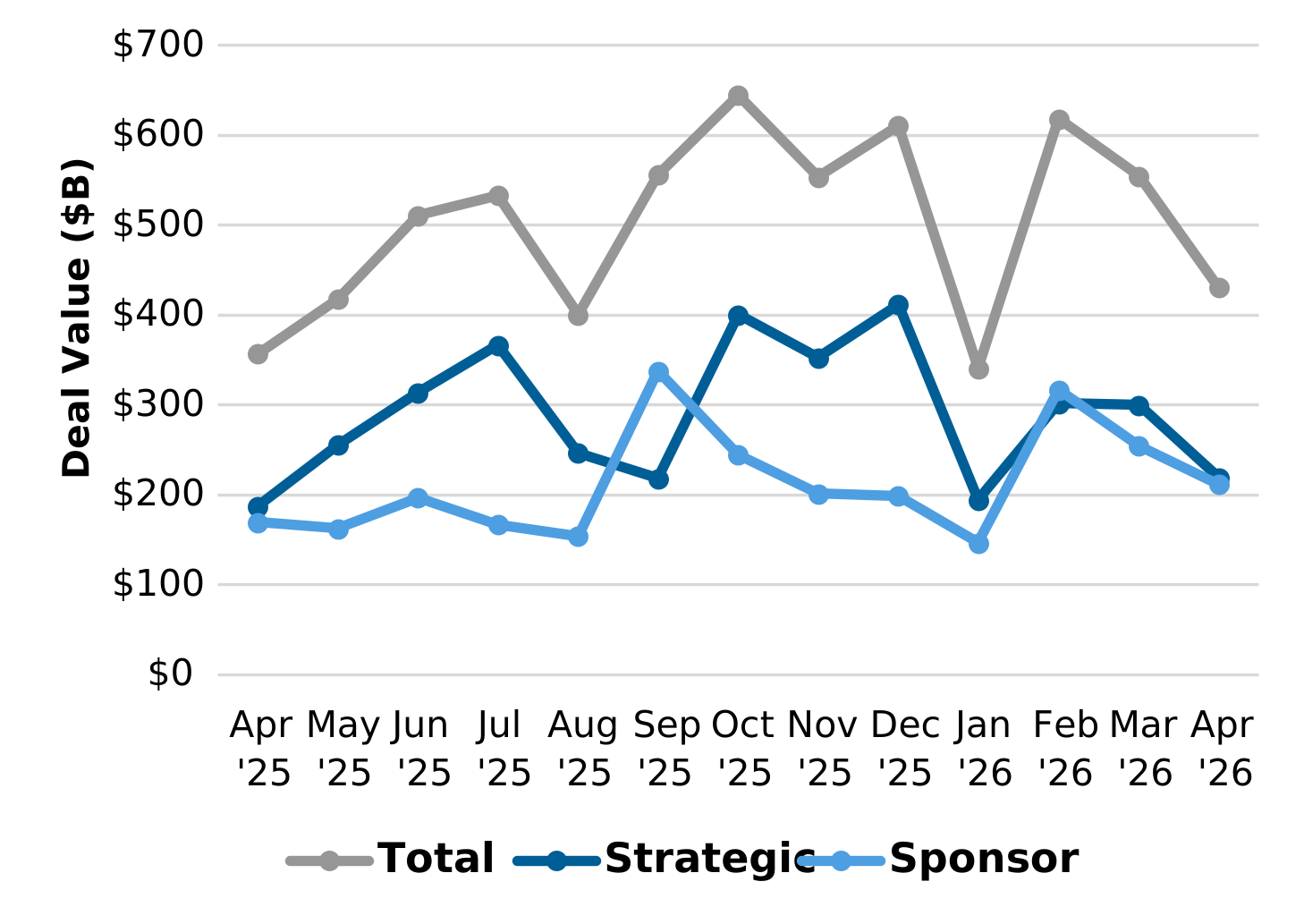
- Deal activity pulled back MoM but outperformed YoY: Across buyer types, April global deal value declined month-over-month but was up 21% compared to last year. Deal count fell 26% to the lowest level in over a year.
- AI continues to drive U.S. M&A: Software deals maintained the top position by both count and value in April, as investments in AI-focused tech entrants continue to fuel market activity.
- Crossborder tie-ups remain active: Despite a 38% decline from March's four-year high, U.S. outbound deal value in April remained elevated year-over-year (+64%). Inbound activity rose 17% from March to April, to $37 billion.
- SEC clears path for faster execution of cash tender offers: The SEC's April 16 exemptive order cuts the minimum tender offer period from 20 to 10 business days for qualifying all-cash, friendly equity tender offers, substantially compressing two-step acquisition timelines.
Global M&A Activity Update
 Deal Value Trends

 Deal Count Trends
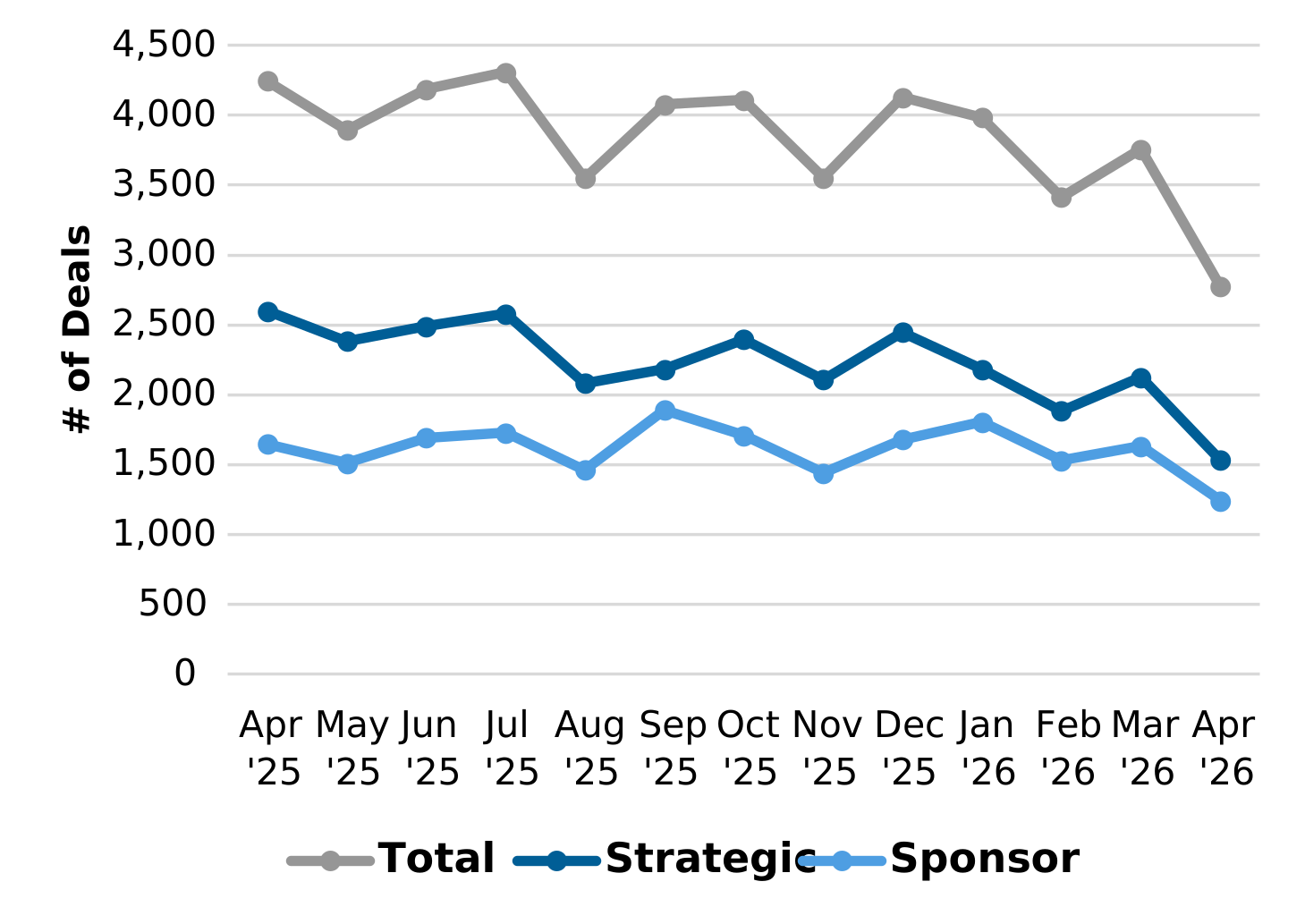
Global deal count fell 26% in April from March to about 2,800 transactions, the lowest monthly count in over a year. Year-over-year, deal count declined 35%.
Strategic buyer deal count in April was down 28% from March to just over 1,500 transactions. Year-over-year, strategic buyer deal count declined 41%.
Sponsor deal count in April was down 24% from March to about 1,250 transactions. Year-over-year, sponsor deal count dropped 25%.
Active M&A Industries (U.S. Targets)
 By Deal Count
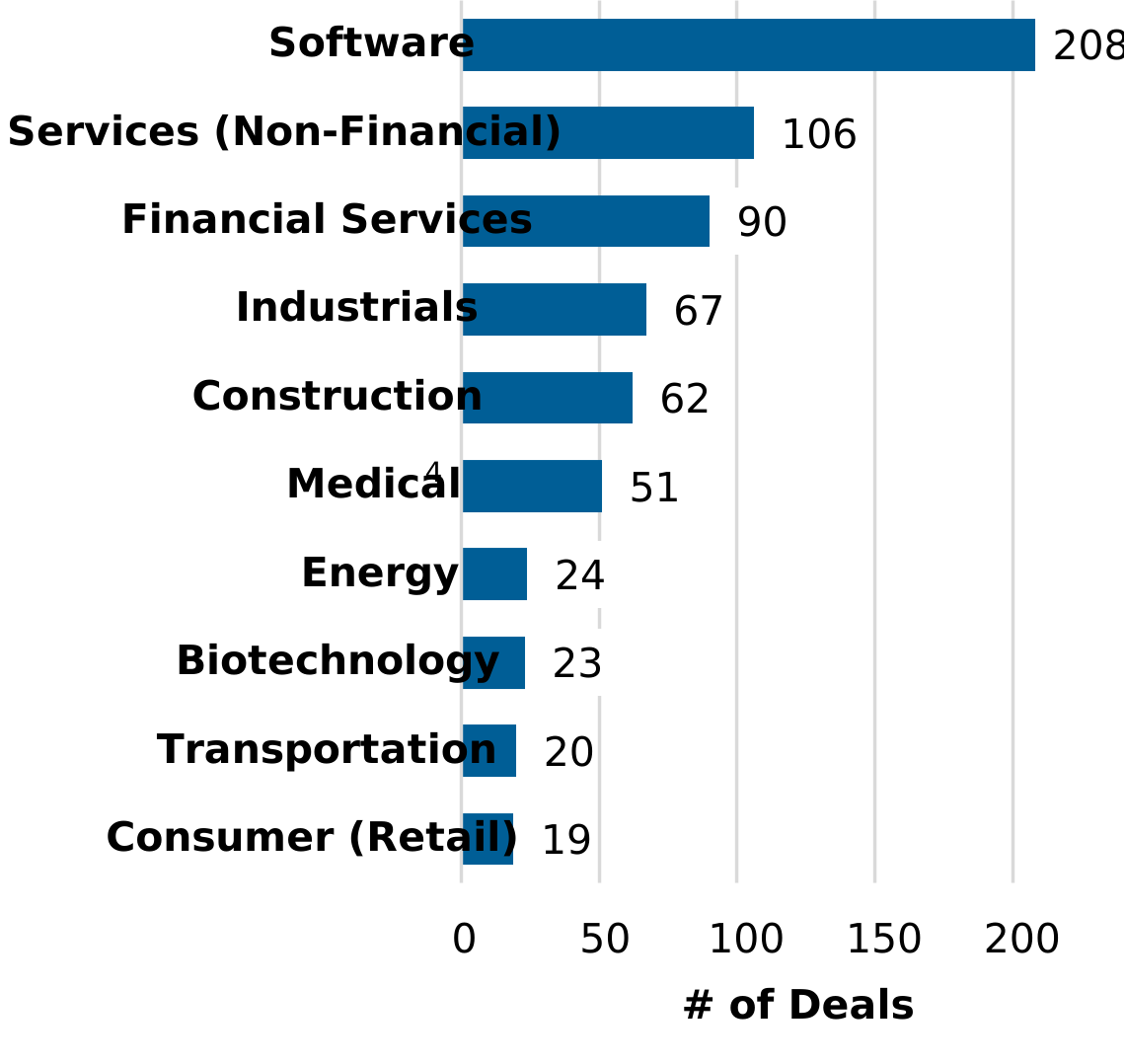
- The software3 industry remained at the top for U.S. M&A activity by deal count in April, continuing its multi-year streak as the leading industry by volume, driven by investments in AI targets.
- Services industries (financial and non-financial) remained active, rounding out the most active sectors in April by deal count.
 By Deal Value
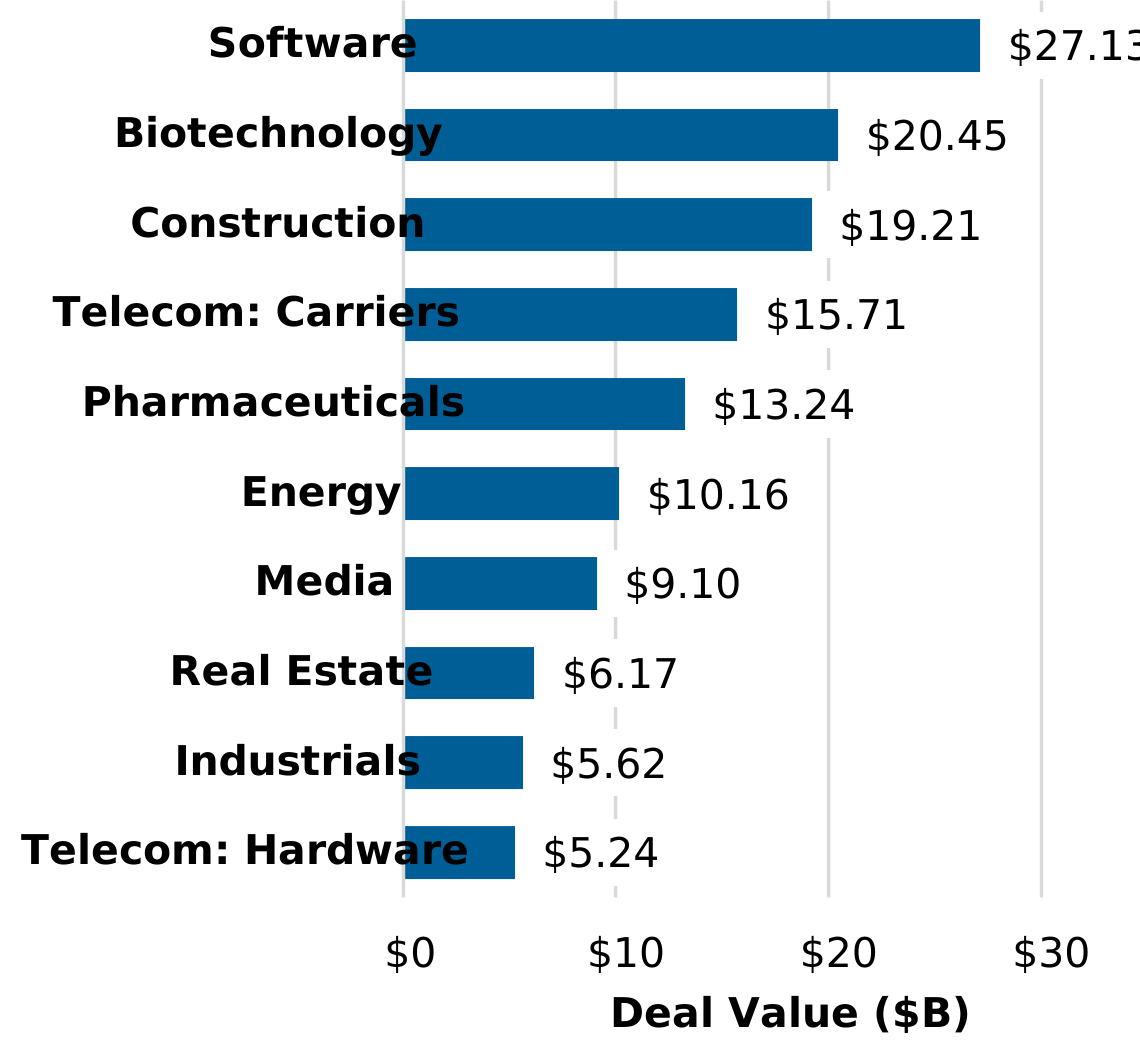
- The software industry also topped the charts for U.S. M&A activity by deal value in April, driven by the $10 billion investment in AI company Project Prometheus highlighted below.
- The biotechnology and construction industries took second and third place, respectively. Biotechnology had seven billion-dollar+ deals; construction was carried by QXO’s pending $17 billion acquisition of TopBuild Corporation.
Monthly Blockbuster Deals

Largest U.S. Controlling Acquisition
QXO has agreed to acquire TopBuild in a cash and stock transaction valued at approximately $17 billion.

Largest U.S. Minority Investment
Project Prometheus5 raised $10 billion from a group of investors led by JPMorganChase and BlackRock.
 Inbound U.S. M&A Activity
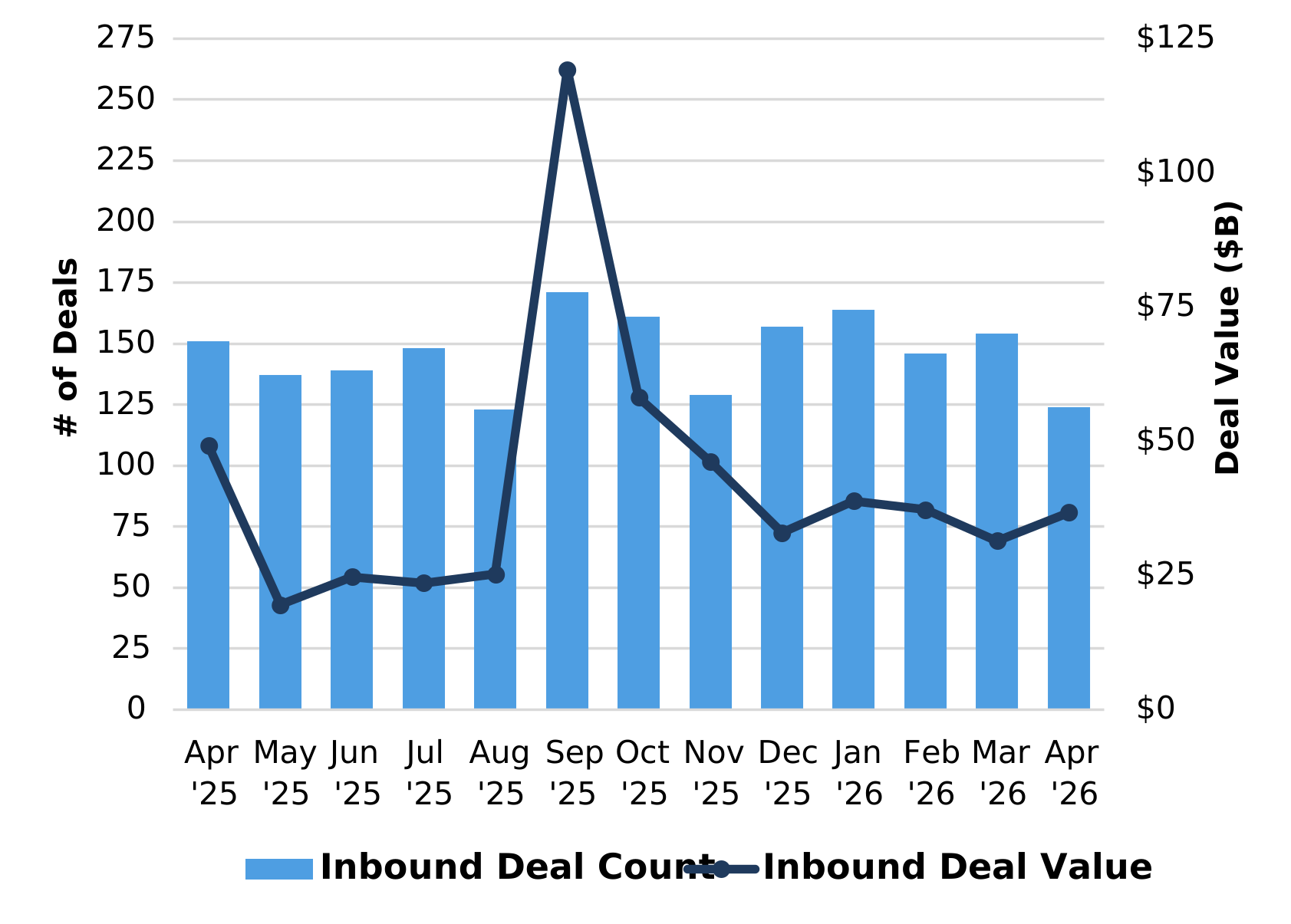
 By deal value, inbound U.S. activity increased 17% from March to April to $37 billion. Nearly one-third of the month’s inbound deal value came from India-based Sun Pharmaceutical Industries’s $12 billion acquisition of Organon & Co. Year-over-year, inbound deal value declined 25%.
By deal count, acquisitions of U.S. targets by ex-U.S. buyers in April fell 19% from March. Year-over-year, inbound deal count declined 18%.
- Canada-based acquirers undertook the largest number of inbound transactions in February with 27, followed by the UK and Japan. Australia and France were also popular partners.
 Outbound U.S. M&A Activity
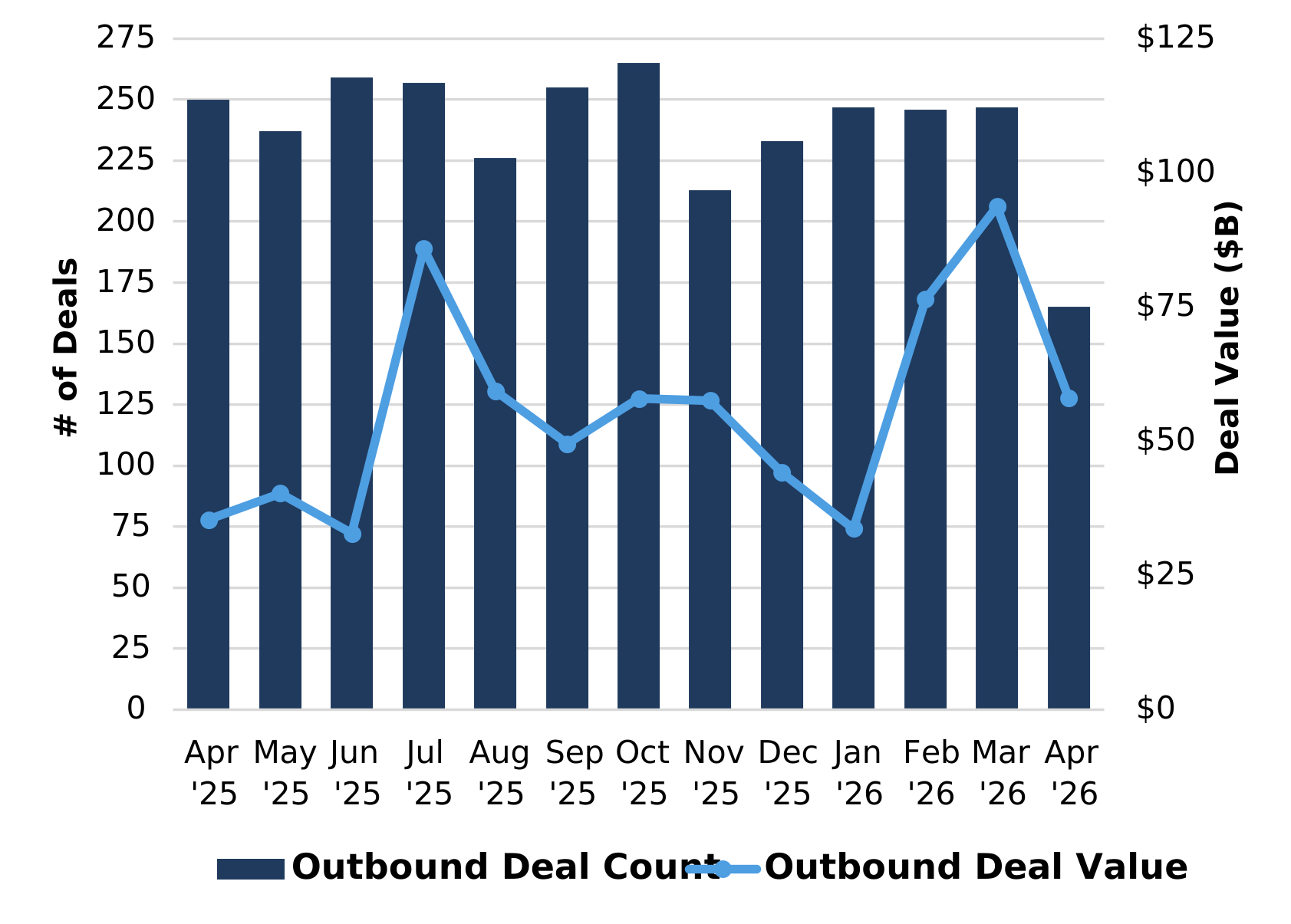
By deal value, acquisitions of ex-U.S. targets by U.S. buyers in April declined 38% from March’s four-year high. The three largest outbound deals (two Irish targets and one German) accounted for nearly half of monthly value. Year-over-year, outbound deal value was up 64%.
Outbound deal count decreased 33% from March to April to the lowest count in over four years. Outbound deal count was down 34% year-over-year.
- In February, U.S. acquirers looked predominantly to targets in the UK (45 deals), followed by Canada and Germany. France, Ireland, Israel, and Switzerland were also popular partners.
 REGULATORY UPDATE: SEC Clears Path for Quicker Execution of Certain Tender Offers
- On April 16, 2026, the SEC issued an exemptive order that cuts in half the minimum tender offer period (from 20 to 10 business days) for qualifying equity tender offers.
- The order covers third-party tender offers in negotiated (friendly) M&A transactions, as well as issuer partial self-tenders and tender offers for equity securities of non-reporting companies by the issuer or its wholly owned subsidiary.
- The new exemption applies only to all-cash transactions. Hostile bids, going-private transactions and contested situations (competing tender offers) are ineligible for relief.
- Mandated offer extension periods for certain material changes to qualifying tender offers have been reduced to two business days (from five).
- The SEC’s Division of Corporation Finance cited three objectives for the added flexibility:
- Addressing market inefficiencies created by the legacy 20-business-day minimum (in place since 1979);
- Reflection of technological advancements that enable faster dissemination of, and access to, offer materials; and
- Reducing offerors’ and stockholders’ exposure to unnecessary market fluctuations during extended offer periods.
- Read more about the order here.

 Implications for Public M&A
The order clears a path for negotiating parties to further compress cash deal timelines by utilizing two-step (tender offer) structures, which are often already preferable for their relative timing advantage over one-step mergers.
Shorter minimum tender periods could significantly widen this timing advantage and will impact deal structuring and other process decisions going forward.
Deal Structuring & Preparedness
- Deal preparedness strategies, including early coordination of tender offer and HSR filings, will become iincreasingly advantageous for the calendar conscious.
- Target boards and their advisors should take into account shortened post-signing periods (during which superior offers could emerge) when negotiating fiduciary-out provisions or considering pre-signing market checks, as potential plaintiffs are likely to scrutinize compressed timelines for wholeco acquisitions.
Regulatory Interplay
- The HSR waiting period for cash tender offers (15 calendar days) is now substantially aligned with the abbreviated 10-business-day offering period for qualifying cash tender offers. Absent second requests or other regulatory hangups, well-prepared parties could shrink the two-step deal timeline for public company acquisitions significantly.
Statutory Considerations
- With less time to solicit tenders, the risk of falling short of statutory thresholds to close back-end mergers without a stockholder vote is heightened – placing greater importance on well-drafted top-up options and subsequent offering periods as a backstop.
- The exemptive order does not affect state law appraisal rights; acquirors and their advisors should ensure that compressed front-end tender offer timelines do not create procedural issues downstream.
- Unless otherwise noted, charts compiled using Mergermarket data for April 2026 as of May 5, 2026. Data for prior months as of April 30, 2026. Aggregate deal values by dollar amount are calculated from the subset of deals with disclosed values.
- Deal value throughout publication excludes Pershing Square Capital’s $64 billion unsolicited bid for Universal Music Group NV.
- Mergermarket includes artificial intelligence deals in the software classification.
- Medical industry classification principally includes medical devices/technology/services, excluding biotech and pharmaceutical deals.
- Project Prometheus is the artificial intelligence startup founded by Jeff Bezos in late 2025.






















Stay Up To Date with Ropes & Gray
Ropes & Gray attorneys provide timely analysis on legal developments, court decisions and changes in legislation and regulations.
Stay in the loop with all things Ropes & Gray, and find out more about our people, culture, initiatives and everything that’s happening.
We regularly notify our clients and contacts of significant legal developments, news, webinars and teleconferences that affect their industries.