
In Dealmaker’s Digest, read the top 10 latest developments in global transactions. We offer insights into M&A activity across industries and borders. To receive our M&A thought leadership, please join our mailing list.
Key Takeaways
- Global M&A activity softened further in August: Both deal value and deal count declined month-over-month as the market pulled back from mid-summer highs.
- Cross-border activity pulled back sharply: U.S. cross-border activity experienced double digit drops in August, with inbound and outbound metrics declining for the third consecutive month.
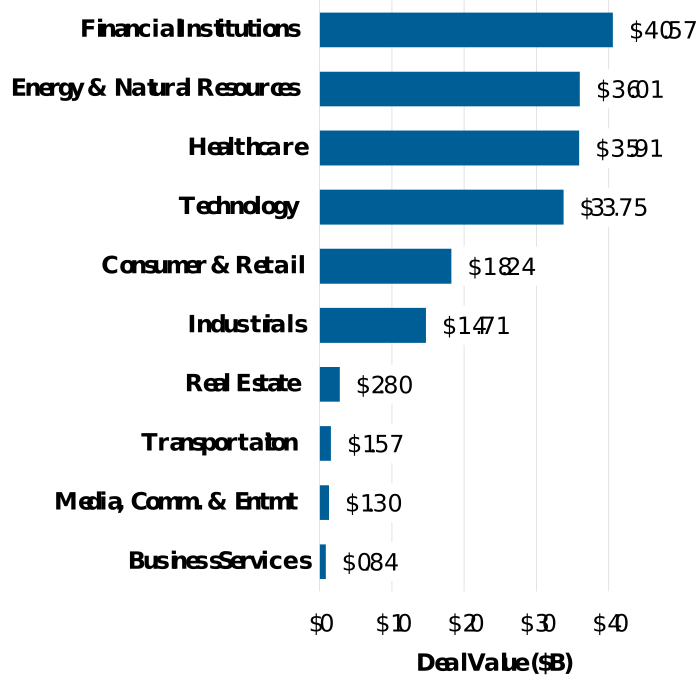
- Financial institutions, energy, and healthcare led sector value: The financial institutions sector topped U.S. M&A deal value in August, followed closely by the energy/natural resources and healthcare sectors, each driven by multiple multibillion-dollar transactions.
- Delaware Chancery Update: Dodiya v. Franklin delivers the first major test of amended Section 144 of the Delaware General Corporation Law, which established safe harbors for conflicted transactions.
Global M&A Activity Update
 Deal Value Trends

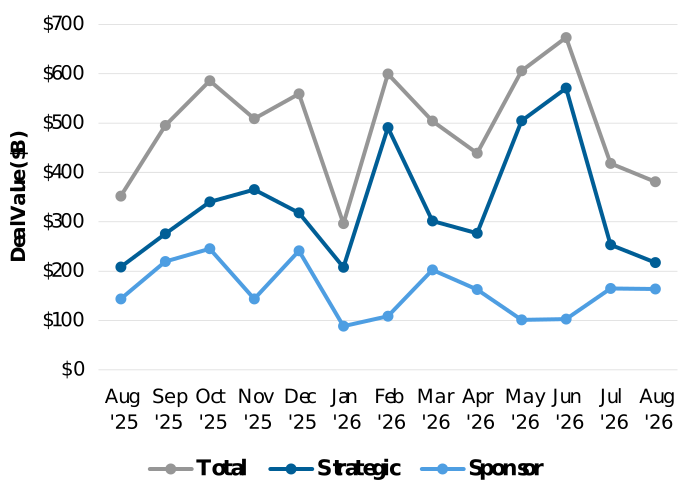
Aggregate global monthly deal value1 in August continued the pullback from June’s record high, declining 9% from July to approximately $380 billion, the lowest monthly value since January. Year-over-year, aggregate deal value was up 8%.
Strategic buyer deal value declined 14% month-over-month to just over $215 billion, continuing Q3’s softness among corporate buyers. Year-over-year, strategic deal value was up 4%.

Financial, or sponsor, buyer deal value held steady (-1%) month-over-month, with August recording approximately $164 billion. Sponsor deal value was up 14% year-over-year.
 Deal Count Trends
Global deal count in August fell 21% month-over-month to approximately 2,700 transactions, falling below the prior month’s two-year low. Year-over-year, aggregate deal count declined 24%.
Strategic buyer deal count in August was down 23% from July to about 1,900 transactions. Year-over-year, strategic buyer deal count declined 28%.
Sponsor deal count in August was down 16% from July and declined 14% year-over-year. Sponsor deal count has now retreated in four of the last six months.

Active M&A Industries (U.S. Targets)
 By Deal Value
- The financial institutions sector led U.S. M&A activity by deal value in August, with three of the 10 largest U.S. deals for the month.
- The energy/natural resources and healthcare sectors followed closely behind, each with multiple multibillion-dollar transactions.
 By Deal Count
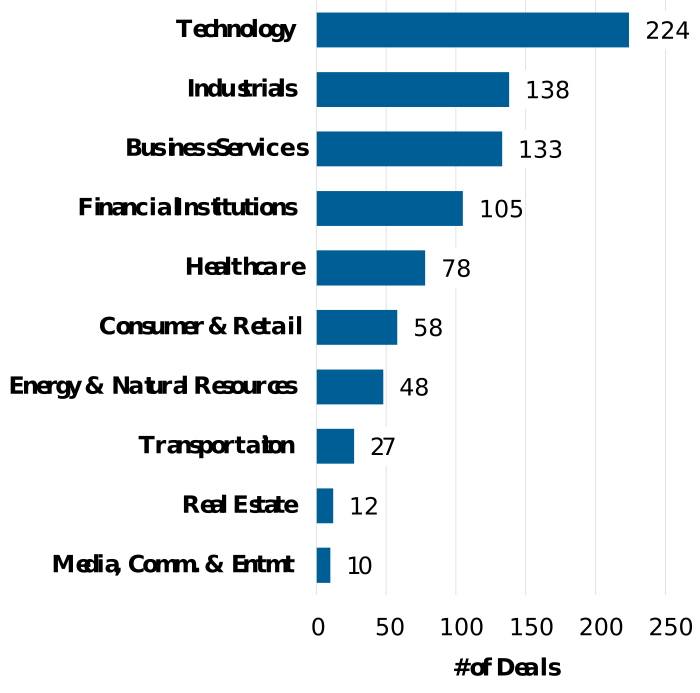
- The technology sector was the most active for U.S. M&A activity by deal count in August, continuing its streak as the leading sector by volume.
- The industrials and business services sectors came in second and third, respectively, in August by deal count.
Monthly Blockbuster Deals
 Largest U.S. Financial Institution Deal
- Aon has agreed to acquire USI in an all-cash transaction valued at $17 billion.
 Largest U.S. Healthcare Deal
- Lantheus and Curium have agreed to merge in a transaction2 valued at up to $8 billion.
 Inbound U.S. M&A Activity
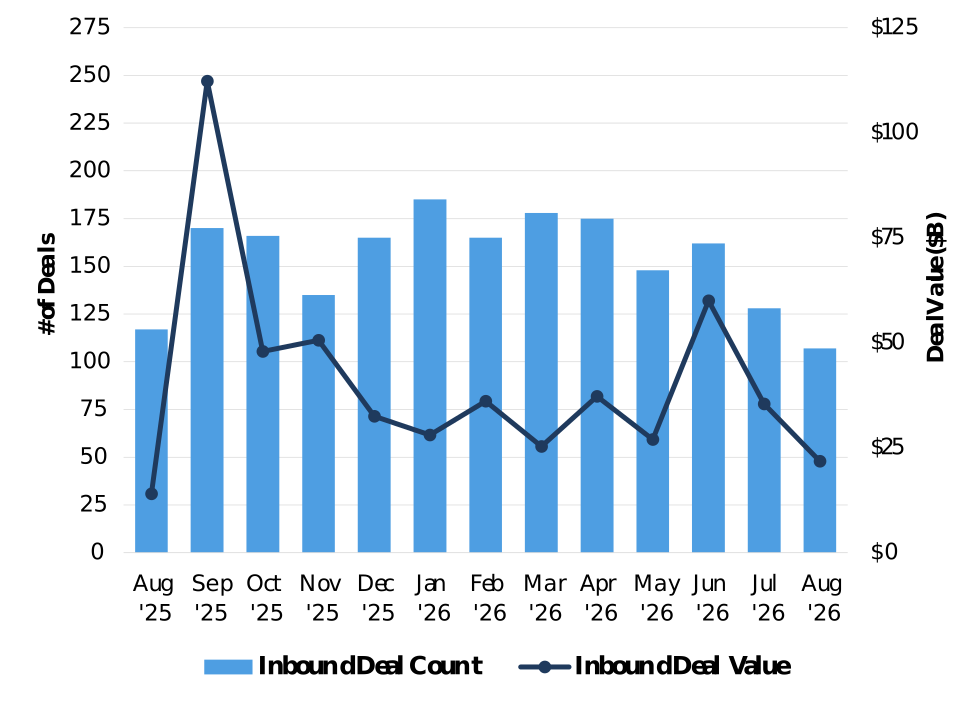
By deal value, inbound U.S. activity fell 38% from July to approximately $22 billion, the lowest monthly value in a year. Year-over-year, inbound deal value was up 55%.
By deal count, acquisitions of U.S. targets by ex-U.S. buyers fell 16% from July to 107 transactions. Year-over-year, inbound deal count declined 9%.
- Canada-based and UK-based acquirers tied for the largest number of inbound transactions in August (with 18 each), followed by Japan. France and South Korea were also popular partners.
 Outbound U.S. M&A Activity
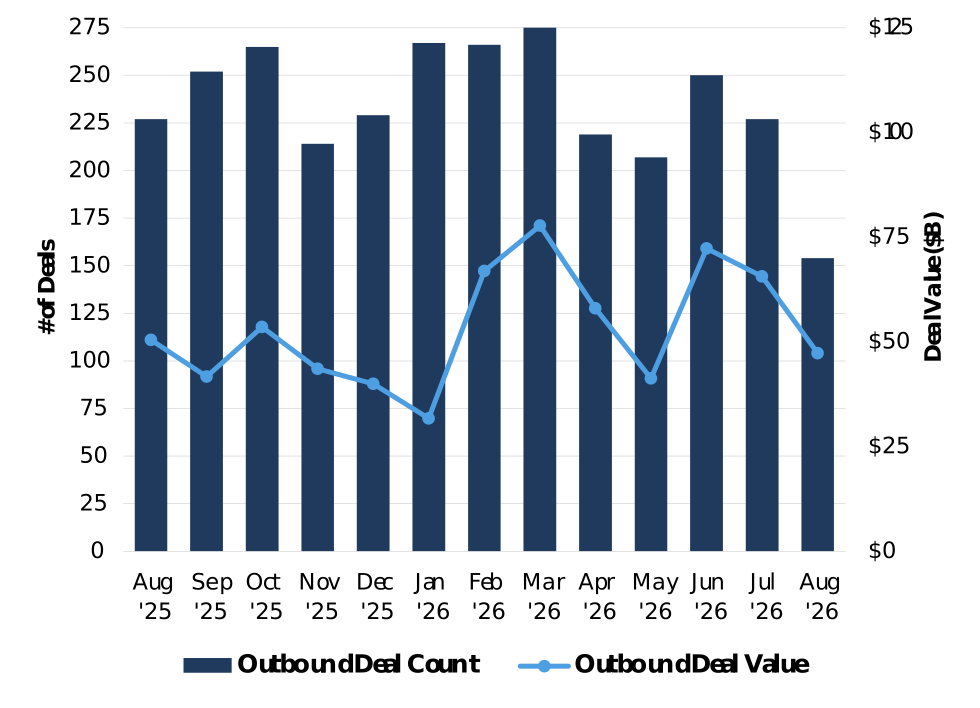
By deal value, outbound U.S. activity declined 28% from July to approximately $47 billion. Year-over-year, outbound deal value was down 6%.
By deal count, outbound transactions in August decreased 32% from July to just over 150 deals, continuing a downward trend. Year-over-year, outbound deal count declined 32%.
- In August, U.S. acquirers looked predominantly to targets in the UK (with 28 deals), followed by Canada and Germany. The Netherlands, Japan, and Australia were also popular partners.

Market Spotlight: India3
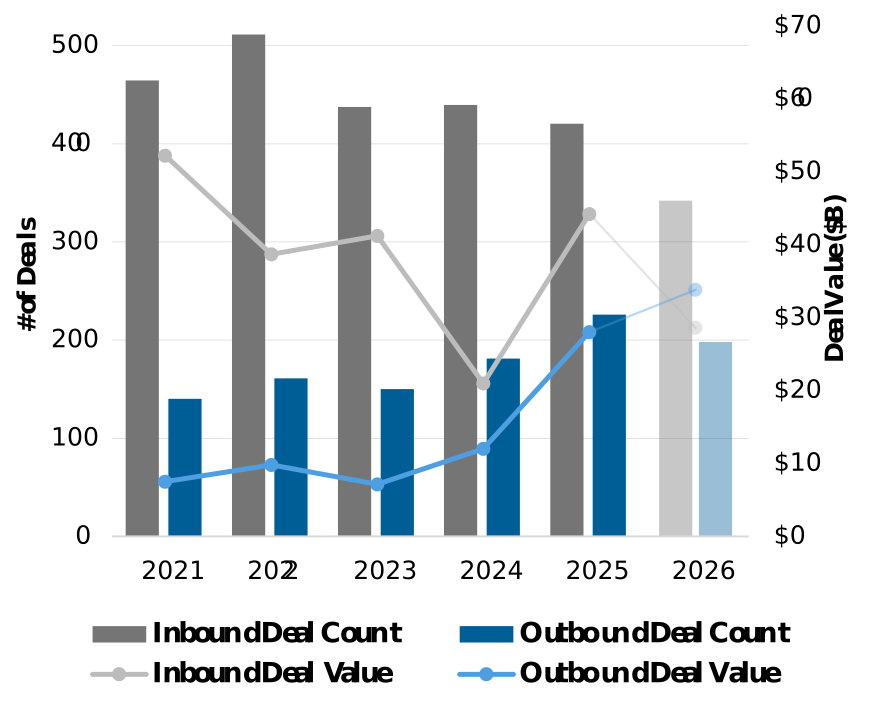
- India crossborder M&A activity surged in 2025, with both inbound and outbound deal value more than doubling from 2024. Inbound deal value jumped 111% to $44 billion, anchored by transactions like Schneider Electric’s €5.5 billion acquisition of the remaining stake in its Indian joint venture from Temasek. Outbound deal value rose 133% to $28 billion.
- Annualized 2026 data is divergent. Inbound deal value is on pace to decline ~35% from 2025 (to ~$29 billion), with count tracking ~19% lower – partly a function of the exceptionally high 2025 base. Outbound deal value, however, continues to accelerate, demonstrated by Sun Pharma’s $11.75 billion pending acquisition of U.S.-based Organon.
- U.S.-based acquirers remain the top source of foreign investment into India and by a wide margin so far in 2026, followed by the UK and Singapore. All three countries were also popular outbound partners.
 Delaware Court of Chancery: Dodiya v. Franklin
- In Dodiya v. Franklin,4 the Delaware Court of Chancery issued the first significant interpretation of last year’s amendments to Section 144 of the Delaware General Corporation Law, which established safe harbors for conflicted transactions involving the board or controlling stockholders through either independent-director approval (Section 144(a)(1)) or a fully informed stockholder vote (Section 144(a)(2)).
- The court held that the disinterested-director safe harbor was unavailable where it was reasonably conceivable the board acted with gross negligence. Under Section 144(a)(1), a disinterested-director majority vote alone is not sufficient; the statute requires that “the board or committee in good faith and without gross negligence” authorizes the transaction. Here, the board restored a conflicted CEO’s access to sale-process information after learning he had leaked material nonpublic data to the buyer, making it reasonably conceivable that the board acted with “reckless indifference” to the risk that confidential information would reach the buyer – thereby defeating the safe harbor.
- The Section 144(a)(2) stockholder-vote safe harbor was also unavailable. The proxy statement had assured stockholders that the CEO did not participate in any activities, meetings, or communications regarding the sale process after his recusal, an assertion the court found to be contradicted by the board’s own records. Because this discrepancy could have been material to a reasonable stockholder’s voting decision, the court held the vote was not “informed” as required by the statute.
The court dismissed claims against the five disinterested directors under the company’s exculpatory charter provision, which shielded them from personal liability for acts other than breaches of the duty of loyalty or bad faith. With respect to the disinterested directors, the allegations supported a finding of gross negligence but did not give rise to a reasonably conceivable inference of disloyalty or bad faith. - Key takeaway: Dodiya makes clear that Section 144’s safe harbor protections are vulnerable to grossly negligent processes, even where the statute’s disinterested-director vote threshold is satisfied.
- Unless otherwise noted, charts compiled using Mergermarket data for August 2026 as of September 8, 2026. Aggregate deal values by dollar amount are calculated from the subset of deals with disclosed values.
- Under the terms of the agreement, Curium will acquire all of the outstanding shares of Lantheus in cash at closing, plus non-transferable contingent value rights.
- Chart compiled using Mergermarket data of September 1, 2026. Data for 2026 has been annualized as of August 31, 2026.
- Dodiya v. Franklin, No. 2025-0932-LWW (Del. Ch. Aug. 26, 2026).























Stay Up To Date with Ropes & Gray
Ropes & Gray attorneys provide timely analysis on legal developments, court decisions and changes in legislation and regulations.
Stay in the loop with all things Ropes & Gray, and find out more about our people, culture, initiatives and everything that’s happening.
We regularly notify our clients and contacts of significant legal developments, news, webinars and teleconferences that affect their industries.