
In Dealmaker’s Digest, read the top 10 latest developments in global transactions. We offer insights into M&A activity across industries and borders. To receive our M&A thought leadership, please join our mailing list.
Key Takeaways
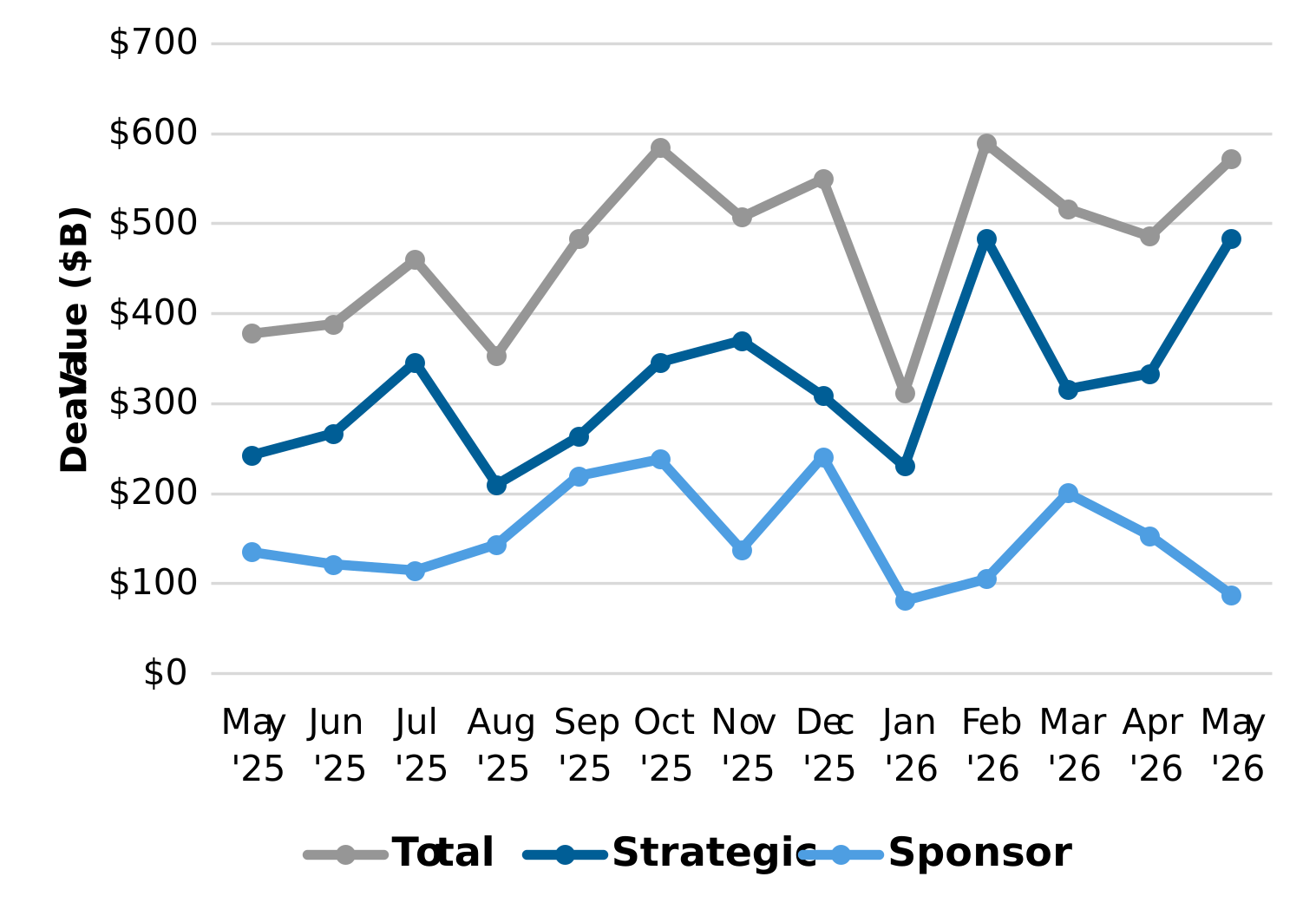
- Global deal activity mixed: Global monthly deal value jumped 18%, driven by nearly $250 billion from the largest five deals, while global deal count dropped to about 2.9k, the lowest monthly volume this year.
- Crossborder activity on the decline: U.S. inbound and outbound activity decreased in May, with the lowest monthly counts recorded this year and 28% (inbound) and 60% (outbound) drops in deal value.
- Wave of utility consolidations continues: The energy and natural resources sector ranked second for U.S. M&A activity by deal value in May, headlined by NextEra Energy's and Dominion Energy's mega-merger, as the AI boom has driven a new wave of utility M&A.
Global M&A Activity Update
 Deal Value Trends


 Deal Count Trends
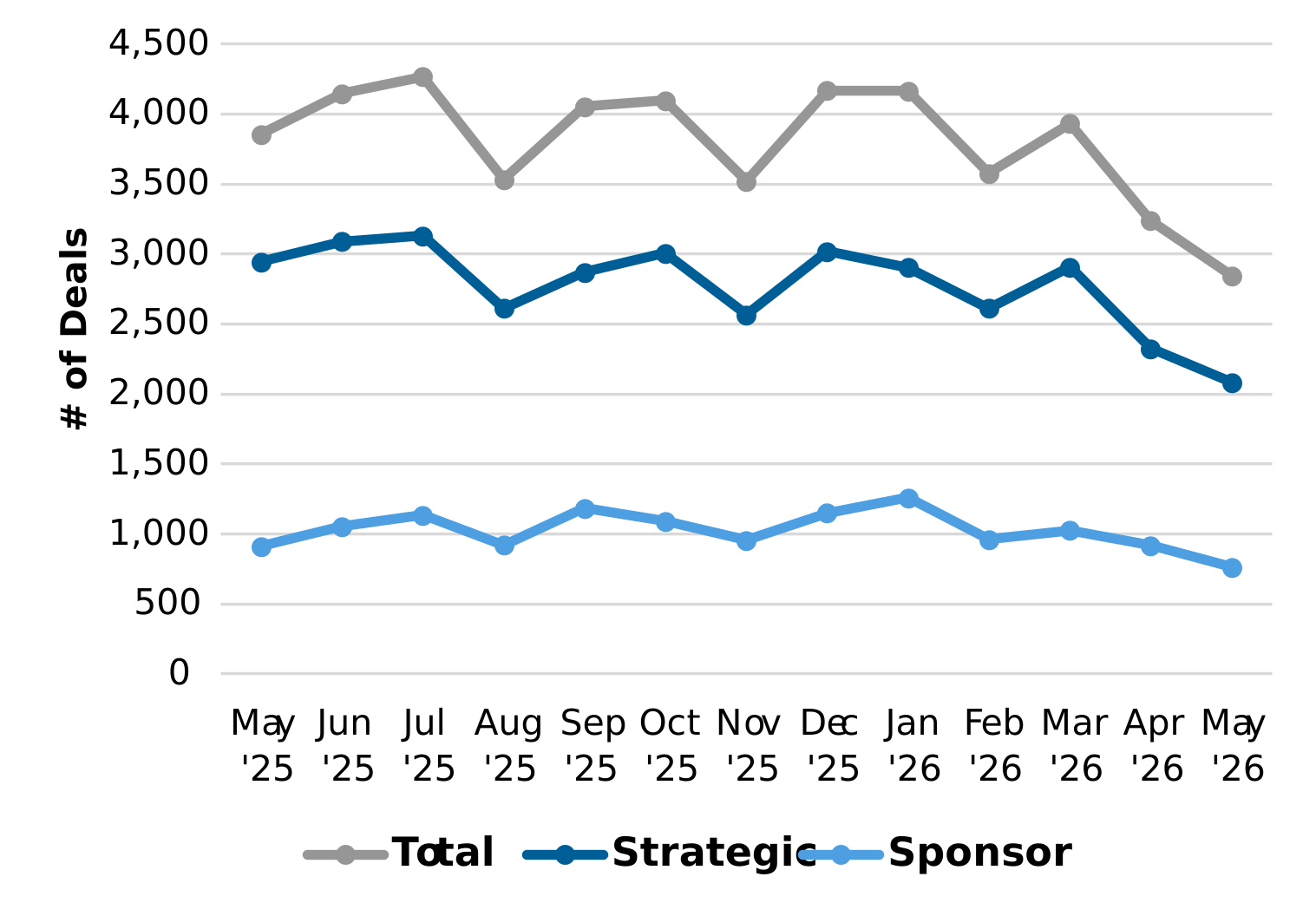
 Global deal count in May dropped 12% from April, furthering last month’s decline. With about 2,850 transactions, May was the lowest count in the past year. Year-over-year, deal count declined 26%.
Strategic buyer deal count in May was down 10% from April to just under 2,100 transactions. Year-over-year, strategic buyer deal count declined 29%.
Sponsor deal count in May was down 17% from April and was about 300 deals below the 13-month average. Year-over-year, sponsor deal count dropped 16%.
Active M&A Industries (U.S. Targets)
 By Deal Count
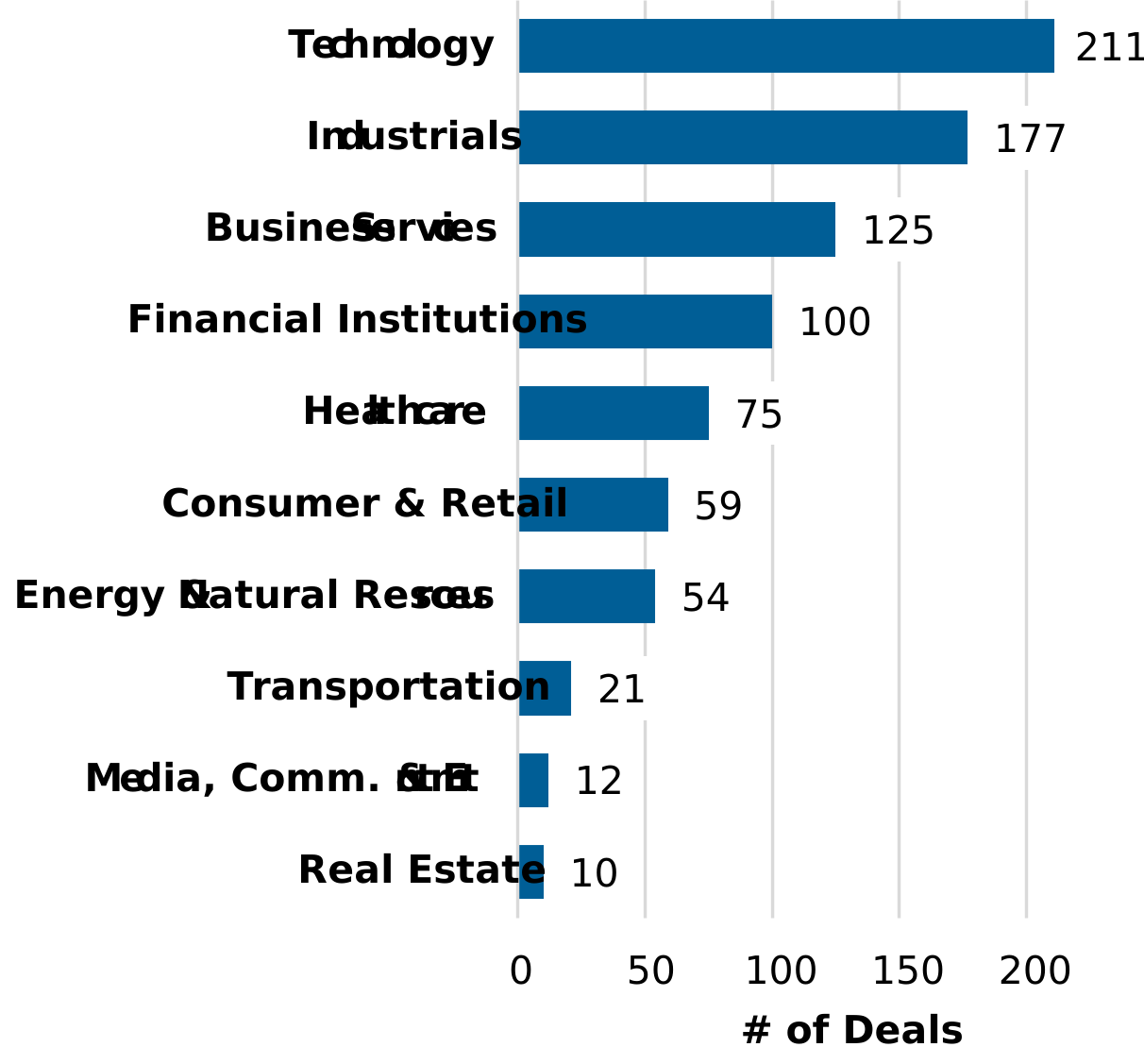
- The technology industry remained at the top for U.S. M&A activity by deal count in May, continuing its five-year streak as the leading industry by volume, driven by investments in AI and software.2
- The industrials and business services sectors rounded out the most active sectors in May by deal count.
 By Deal Value
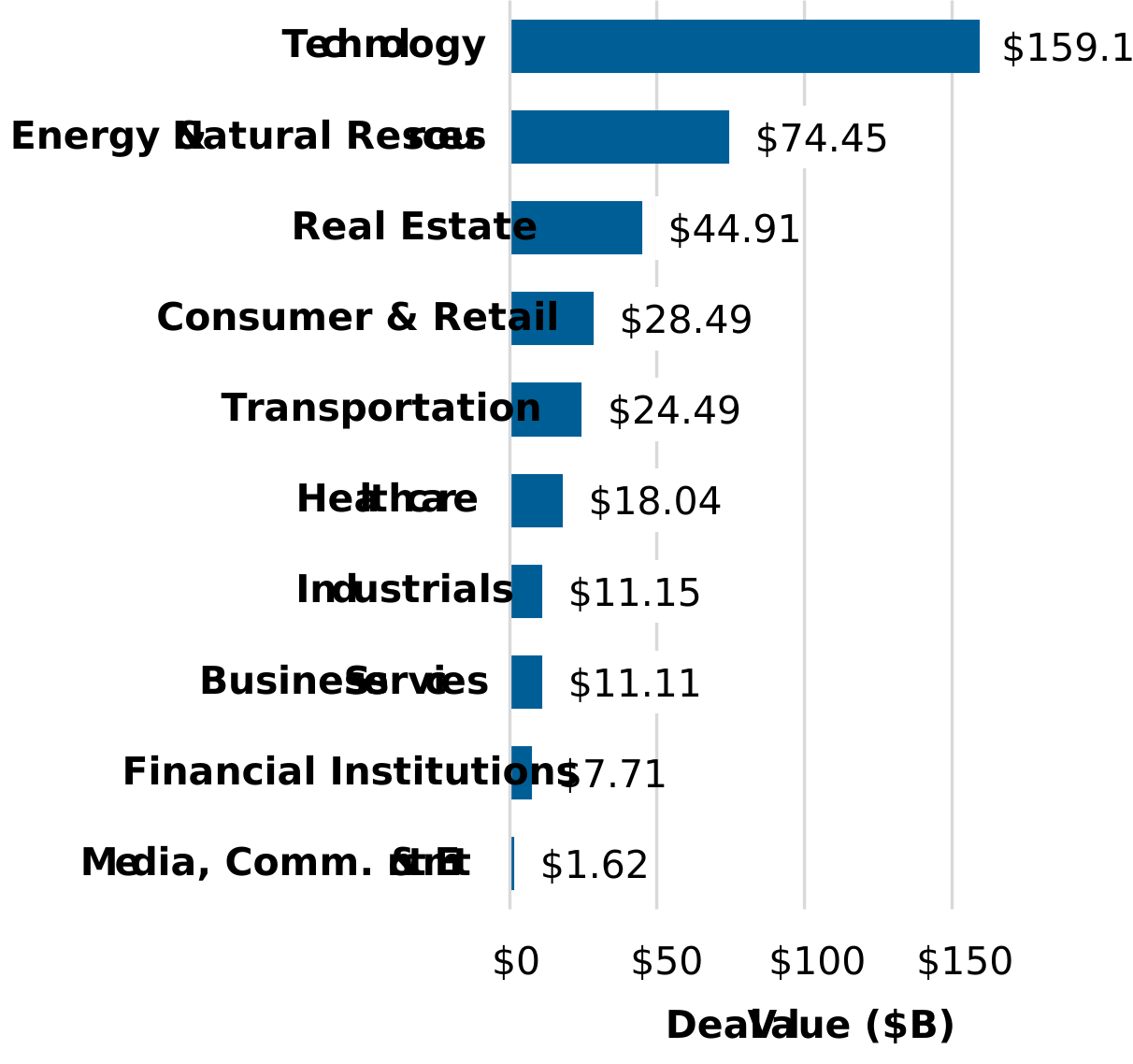
- The technology industry also topped the charts for U.S. M&A activity by deal value in May, driven by over $68 billion in AI-related investments.
- The energy and natural resources sector came in second, bolstered by the $66.8 billion utility merger highlighted below. Real estate transactions came in third.
Monthly Blockbuster Deals

Largest U.S. Merger
NextEra Energy and Dominion Energy agreed to merge in an all-stock transaction valued at $66.8 billion.

Largest U.S. Minority Investment
Anthropic raised $65 billion from a group of investors led by Altimeter, Dragoneer, Greenoaks, Sequoia and others.3
 Inbound U.S. M&A Activity
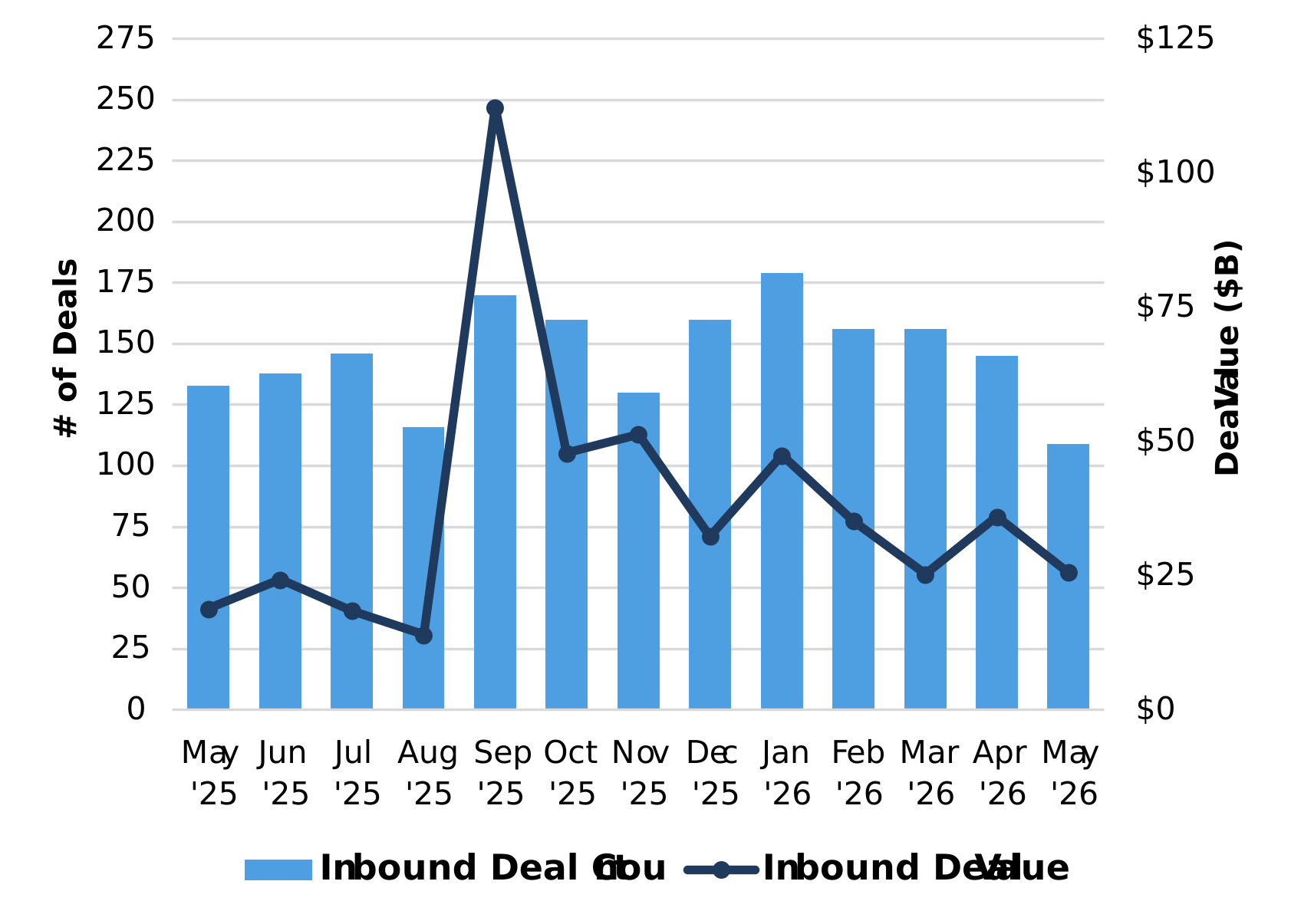
By deal value, inbound U.S. activity dropped 28% from April to May with eight deals between $1 billion and $5 billion, half of which were healthcare targets. However, year-over-year, inbound deal value was up 38%.
By deal count, acquisitions of U.S. targets by ex-U.S. buyers in May fell 23% from April to the lowest count in the last year. Year-over-year, inbound deal count was also down 15%.
- Canada- and UK-based acquirers tied for the largest number of inbound transactions in May (with 15 each), followed by Sweden (10). Germany was also a popular partner.
 Outbound U.S. M&A Activity
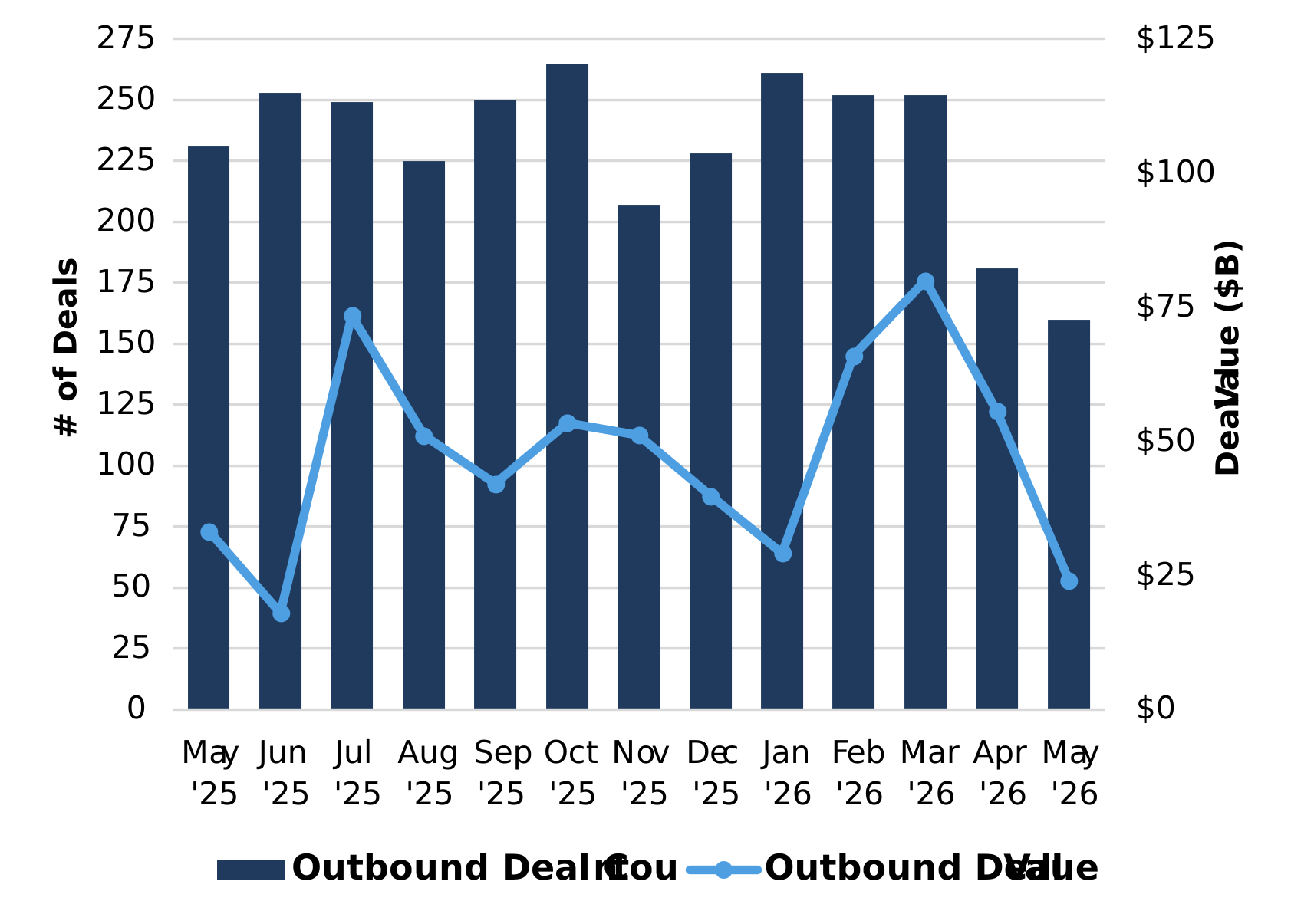
By deal value, acquisitions of ex-U.S. targets by U.S. buyers in May dropped 60% from April to just over $22 billion with five deals between $1 billion and $5 billion. Year-over-year, outbound deal value was down 34%.
Outbound deal count decreased 11% from April to May to a new five-year low. Outbound deal count was down 28% year-over-year.
- In May, U.S. acquirers looked predominantly to targets in the UK (35 deals), Canada (18) and Germany (16). France and Italy were also popular partners.
 TRANSACTION TRENDS: AI Boom Drives a New Wave of Utility M&A
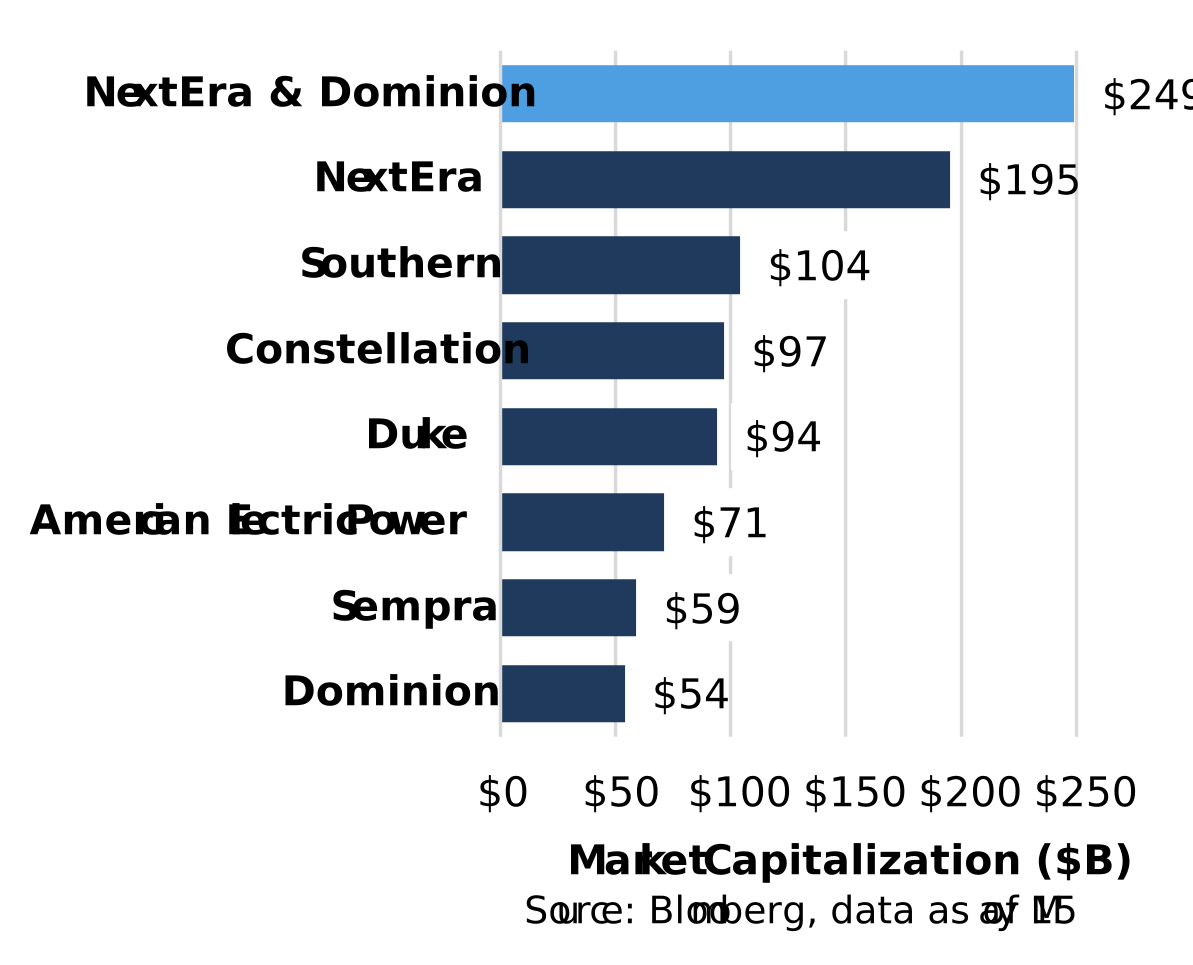
- NextEra Energy's proposed $66.8 billion acquisition of Dominion Energy – which is poised to create the largest U.S. utility by a wide margin – is the latest in a wave of utility consolidation and demonstrates how a larger regulated utility base can facilitate buildouts to meet surging AI-driven electricity demand.
- Post-close, approximately 80% of the combined entity’s pro forma earnings are expected to come from rate-regulated operations (the “wires and poles” business overseen by state regulators), up from roughly 70% for standalone NextEra. Dominion brings approximately 10 million customer accounts across high-growth jurisdictions (including Virginia and the Carolinas) with significant data center concentration.
- The expanded regulated base would give the combined entity the credit headroom to pursue unregulated generation and development opportunities outside Florida without risking a ratings downgrade.
- The deal is part of a broader pattern. Transactions involving AES Corp., Constellation Energy, Cleco Power and Allete signal sector-wide momentum, while technology companies are increasingly engaging with power plant developers for dedicated data center energy supplies. With data centers projected to consume 9–17% of U.S. electricity generation by 2030 (up from ~4%–5% today), the competitive premium is shifting toward companies that can build new generation capacity at scale.
 Implications for Public M&A
- The AI infrastructure buildout continues to accelerate, with ~$2.9 trillion in global CapEx expected through 2028.
- As end-market demand matures, bottlenecks are shifting from graphics processing units (GPUs) alone to power delivery, cooling and execution. KKR’s agreed sale of liquid-cooling provider CoolIT to Ecolab for $4.8 billion underscores how cooling infrastructure has proven investable in its own right.
- Hyperscalers are pursuing a dual strategy of self-build and third-party leasing, sustaining demand for both owned campuses and sponsor-backed platforms.
- Even the best-funded companies are turning to public markets to keep pace with the AI buildout: Alphabet is raising $80+ billion in new equity, and highly anticipated IPOs by SpaceX, Anthropic and OpenAI could make 2026 a record year for public capital raising.
-
Capital efficiency remains a priority even amid record spending: Alphabet reported that Gemini server unit costs declined 78% over the course of 2025 through model optimizations and utilization improvements.
-
Microsoft has indicated that customer demand continues to exceed available capacity and that much of the GPU capacity it is procuring is already committed.
-
Hyperscalers are integrating vertically across the full AI stack – from power generation to proprietary chip design to computing infrastructure – rather than relying on existing supply chains at any single layer. OpenAI and Softbank’s $500 million co-investment in SB Energy, alongside a 1.2-gigawatt lease, illustrates the trend extending into energy.
-
Read more from our Artificial Intelligence Q1 2026 Global Report.
- Unless otherwise noted, charts compiled using Mergermarket data for May 2026 as of June 5, 2026. Aggregate deal values by dollar amount are calculated from the subset of deals with disclosed values.
- Mergermarket includes artificial intelligence deals in the technology classification, under the software subsector.
- Also co-led by Capital Group, Coatue, D1 Capital Partners, GIC, ICONIQ, and XN. Other investors included Micron, Samsung and SK Hynix.






















Stay Up To Date with Ropes & Gray
Ropes & Gray attorneys provide timely analysis on legal developments, court decisions and changes in legislation and regulations.
Stay in the loop with all things Ropes & Gray, and find out more about our people, culture, initiatives and everything that’s happening.
We regularly notify our clients and contacts of significant legal developments, news, webinars and teleconferences that affect their industries.